Reply Fluently! 6 Easy English Conversation Responses สาธารณะ

ประเภท:
ลักษณะ:
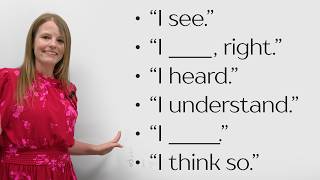
You’ll learn six easy, everyday English responses that native speakers use all the time in conversation. We focus on short, common replies you can use quickly and naturally, such as I see, I know, I heard, I guess, and I think so. You’ll learn the meaning of each response, see them used in real examples, and practice intonation so you can express the right attitude and emotion. This lesson will also help improve your listening skills, since these short replies are very common in spoken English. Finish with a quiz at the end to practice and check what you’ve learned. https://www.engvid.com/6-easy-english-conversation-responses/
More of my Easy English Conversation videos:
https://youtu.be/1txW3y3F2Fo
https://youtu.be/zM6j8XU7P0I
In this lesson:
0:00 6 Short English Replies
0:52 "I see."
2:39 "I know." & "I know, right."
4:28 "I heard."
6:00 "I understand."
7:47 "I guess."
9:39 "I think so."
Transcript:
Hello, my name is Emma, and today we are going to talk about how to answer questions or respond in a conversation using a very short reply. We do this every day in English. The replies were going to learn today are usually two or maybe three words. Theyre used a lot in English, and these replies help you to communicate quickly. They help you to sound natural. They can help your listening, and specifically, we will look at six common replies you might say in a conversation. So, this is an important lesson. Lets get started.
So, the first expression today is "I see." "I see" is used a lot. It means "Now I understand." We use it in a conversation where theres new information, and usually that information is a little disappointing or bad. So, for example, "The shop is closed." "Oh, I see." So, this persons not happy. Theyre saying, "Oh, I understand, but Im not really happy." Or imagine you want to meet somebody. "Oh, shes too busy to meet you. This is bad news." "Oh, I see." So, "I see" can also be used in positive or other situations, but its often used with bad news when you are disappointed. Imagine you want to go to a concert, and you are about to buy your ticket, and they say, "No more tickets. Were sold out." "I see. I see." So, it means "I understand. I accept this bad news." Or you want a job. They tell you, "Im sorry, we cant give you this job. You dont have enough experience." "I see." So, "I see" is often used for negative situations, meaning you understand, but youre not really happy with the situation.
So, the next short reply is "I know." Or for younger people, sometimes they say, "I know, right?" So, "I know" means that it can have two meanings. One meaning is someone says something, they try to give you some news, but you already know the news, or you already know the information. Its not new information for you. Or you might use this if you agree with something, to show you agree. So, lets look at both of these examples. So, to show you the first meaning, we have this man. He says, "Have you heard? The company has a new president." If you know already, you might say, "I know. I know." It means that you already have this information. "Did you hear? Peggy lost her job. I know." So, thats an example of that. The second way we use this is to show agreement. It can be very simple. "Its hot." "I know." Or, "I know, right?" "This is a great movie." "I know. I know, right?" You know, "The restaurant is so expensive." "I know, right?" Or, "I know." So, "I know" can also be used to show you agree with someone. We use it in this way a lot.
So, the next short reply we use in everyday conversation is "I heard." "I heard" means that someone tells you something, but you already know this information. The information is not new to you. You know the information already. So, we can use this for good information or bad information. Both are possible. So, lets look at some examples. Imagine this guy says, "Oh, you know the new teacher? The new teacher is from France." If you already have that information, you might say, "Oh, yeah. I heard." This means that they already know the teacher is from France. "The teacher is from France. I heard." Heres another example. "Oh, Tom lost his job. I heard." So, we use this a lot, and the way you use your voice can show your emotion if its good or bad news. So, if somebody says something sad, you know, like, "Oh, you know, the cat died. Oh, I heard." Or you can say it in a positive way for good news. "Taylor Swift released a new album. Oh, I heard." So, the way you use your voice for these short replies matters because it can show different meaning.
So, the next reply we are going to talk about is "I understand." "I understand" is often used when someone tells you a rule, maybe instructions, or they give you a decision on something. […]
More of my Easy English Conversation videos:
https://youtu.be/1txW3y3F2Fo
https://youtu.be/zM6j8XU7P0I
In this lesson:
0:00 6 Short English Replies
0:52 "I see."
2:39 "I know." & "I know, right."
4:28 "I heard."
6:00 "I understand."
7:47 "I guess."
9:39 "I think so."
Transcript:
Hello, my name is Emma, and today we are going to talk about how to answer questions or respond in a conversation using a very short reply. We do this every day in English. The replies were going to learn today are usually two or maybe three words. Theyre used a lot in English, and these replies help you to communicate quickly. They help you to sound natural. They can help your listening, and specifically, we will look at six common replies you might say in a conversation. So, this is an important lesson. Lets get started.
So, the first expression today is "I see." "I see" is used a lot. It means "Now I understand." We use it in a conversation where theres new information, and usually that information is a little disappointing or bad. So, for example, "The shop is closed." "Oh, I see." So, this persons not happy. Theyre saying, "Oh, I understand, but Im not really happy." Or imagine you want to meet somebody. "Oh, shes too busy to meet you. This is bad news." "Oh, I see." So, "I see" can also be used in positive or other situations, but its often used with bad news when you are disappointed. Imagine you want to go to a concert, and you are about to buy your ticket, and they say, "No more tickets. Were sold out." "I see. I see." So, it means "I understand. I accept this bad news." Or you want a job. They tell you, "Im sorry, we cant give you this job. You dont have enough experience." "I see." So, "I see" is often used for negative situations, meaning you understand, but youre not really happy with the situation.
So, the next short reply is "I know." Or for younger people, sometimes they say, "I know, right?" So, "I know" means that it can have two meanings. One meaning is someone says something, they try to give you some news, but you already know the news, or you already know the information. Its not new information for you. Or you might use this if you agree with something, to show you agree. So, lets look at both of these examples. So, to show you the first meaning, we have this man. He says, "Have you heard? The company has a new president." If you know already, you might say, "I know. I know." It means that you already have this information. "Did you hear? Peggy lost her job. I know." So, thats an example of that. The second way we use this is to show agreement. It can be very simple. "Its hot." "I know." Or, "I know, right?" "This is a great movie." "I know. I know, right?" You know, "The restaurant is so expensive." "I know, right?" Or, "I know." So, "I know" can also be used to show you agree with someone. We use it in this way a lot.
So, the next short reply we use in everyday conversation is "I heard." "I heard" means that someone tells you something, but you already know this information. The information is not new to you. You know the information already. So, we can use this for good information or bad information. Both are possible. So, lets look at some examples. Imagine this guy says, "Oh, you know the new teacher? The new teacher is from France." If you already have that information, you might say, "Oh, yeah. I heard." This means that they already know the teacher is from France. "The teacher is from France. I heard." Heres another example. "Oh, Tom lost his job. I heard." So, we use this a lot, and the way you use your voice can show your emotion if its good or bad news. So, if somebody says something sad, you know, like, "Oh, you know, the cat died. Oh, I heard." Or you can say it in a positive way for good news. "Taylor Swift released a new album. Oh, I heard." So, the way you use your voice for these short replies matters because it can show different meaning.
So, the next reply we are going to talk about is "I understand." "I understand" is often used when someone tells you a rule, maybe instructions, or they give you a decision on something. […]
ต่อไป
เล่นอัตโนมัติ













3 ชั่วโมง